Are Teotihuacan hot air balloons safe?
More people search for a Teotihuacan balloon accident than for the price, which tells you where the anxiety sits. Here is what the rules require, what operators enforce, and what nobody publishes.
 By Alejandro Ramírez, Teotihuacan hot air balloon specialist and experience guide
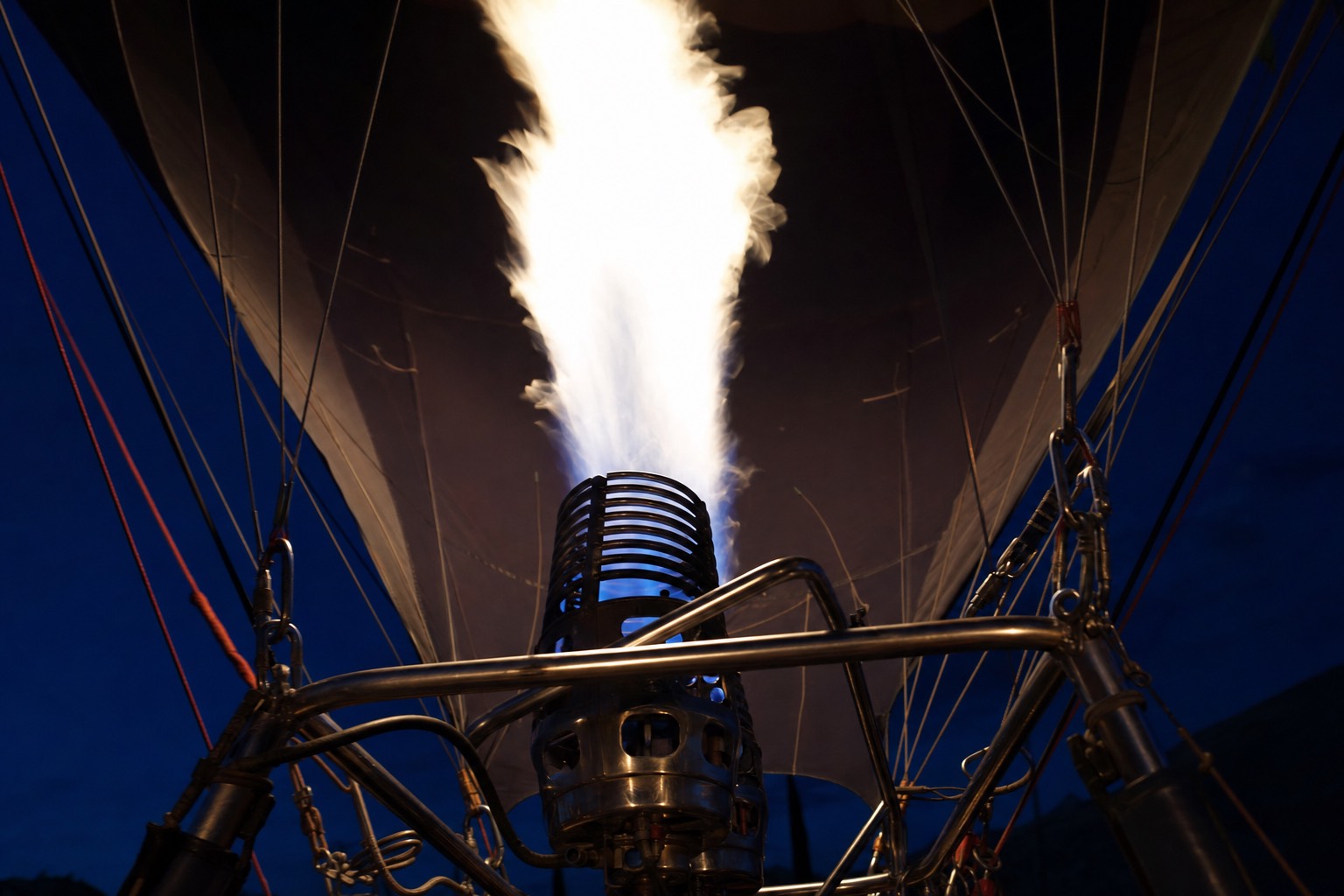
Short answer
Commercial ballooning in Mexico is regulated by AFAC, the Agencia Federal de Aviación Civil. A pilot flying you commercially must hold a valid AFAC free-balloon pilot licence and a current medical certificate, and passenger insurance is legally required. Operators additionally refuse to launch in unsafe wind or rain, and will reschedule or refund rather than fly. Passengers must stand unassisted, sit within a weight limit of roughly 110 to 150 kg depending on operator, and pregnant passengers are not permitted at any stage.
"Teotihuacan hot air balloon accident" gets searched more often than "Teotihuacan hot air balloon price". That is a striking thing about this particular activity: the fear arrives before the shopping. So rather than reassure you in general terms, here is the actual regulatory structure, what operators publish, and where the honest gaps are.
Booking choice
If the safety picture settles it, the next step is a date you can still walk away from: the most-reviewed flight on the valley carries free cancellation up to 24 hours before.
Who regulates this
Commercial balloon flights in Mexico fall under AFAC, the Agencia Federal de Aviación Civil, the federal civil aviation authority. This is not a tourism licence or a municipal permit. It is the same authority that oversees the rest of Mexican civil aviation.
| Regulator | AFAC (Agencia Federal de Aviación Civil) |
|---|---|
| Pilot requirement | Valid AFAC free-balloon pilot licence, plus a current medical certificate |
| Passenger insurance | Legally required, not an optional extra sold to you |
| Who decides whether you fly | The pilot, on the morning, based on wind and visibility |
| Published accident statistics for Teotihuacan | None that we could source. See below. |
The practical consequence of the licensing requirement is that the cheap operator and the expensive one are flying under the same rules with the same insurance obligation. Price differences here reflect what is bundled into the day, not a different safety floor. That is worth knowing before you assume the 1,990 MXN flight is cutting corners the $263 package is not.
The limits operators actually enforce
These are the rules that will decide whether you personally can fly, and they differ between companies, so check the one you book.
| Minimum age | Volare: 5 years. We Fly and Sky Balloons: 4 years, or a minimum height of 1.20 m. |
|---|---|
| Standing requirement | Every operator requires passengers to stand unassisted for the full flight. There is no seating in a balloon basket. |
| Maximum weight | Roughly 110 to 150 kg depending on operator. Some ask at booking so they can balance the basket. |
| Pregnancy | Not permitted at any stage of pregnancy. |
| Upper age limit | None fixed, though some operators request medical clearance for older passengers. |
| Shared basket capacity | Up to 16 passengers (Volare) |
If any of those rules out someone in your group, the age and eligibility guide sets out the alternatives, including which operators have the lowest minimum.
The weather rule, which is the real safety mechanism
Balloons at Teotihuacan launch at dawn for one reason: it is the only part of the day when the air is reliably calm. As the sun heats the valley floor, thermals build and wind picks up, and a balloon has no meaningful ability to steer out of trouble. That is why there is no afternoon flight and never will be.
On the morning itself, the pilot makes the call, and operators publish what happens when the answer is no:
- We Fly offers either a free reschedule or a refund of the flight portion.
- Volare allows a reschedule or cancellation with no extra fee when conditions are unsuitable.
- Platform bookings on GetYourGuide and Viator additionally carry free cancellation up to 24 hours before, which is your own escape hatch rather than theirs.
The financial design here matters more than it looks. An operator who cancels loses the revenue and keeps the cost, so the incentive to fly marginal weather is real. The counterweight is that they are flying under a federal licence with mandatory insurance, and a bad outcome ends the business. Read what happens when weather cancels before you book a date with no slack after it.
If the licensing and insurance picture is what you were worried about, the practical next step is a listing with a long public record rather than a leap of faith: the most-reviewed flight over this valley carries 4.9 stars from more than 7,400 combined Viator and Tripadvisor reviews, and cancellation is free up to 24 hours before, so holding a date while you think costs nothing.
The accident question, answered honestly
We looked for a record of accidents involving balloon flights at Teotihuacan and could not verify one from a primary or reputable source. That is not the same as saying nothing has ever happened, and we are not going to state a safety record we cannot evidence.
What we can say plainly is this. No operator at Teotihuacan publishes a cancellation rate, an incident rate or a safety statistic. If you find a page quoting you a percentage, that number did not come from an operator or from AFAC, because neither publishes one. Treat the page accordingly.
Ballooning as an activity has a specific risk profile: incidents are rare, and when they occur they cluster around weather, power lines, and landings, not mechanical failure in flight. The mitigations are all things you can check on a listing before you book. Does the operator hold an AFAC licence. Do they publish a weather policy. Do they carry the legally required insurance. All three are yes for every operator selling through GetYourGuide and Viator on this valley.
What actually happens on a bumpy landing
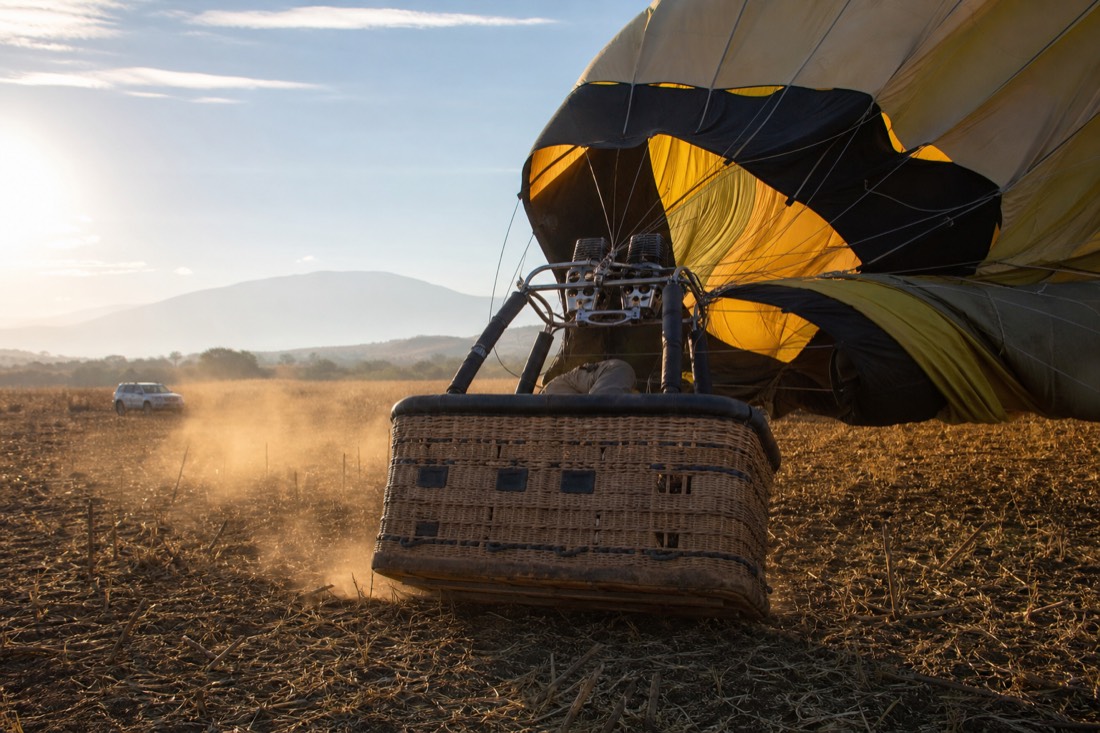
The landing is the part first-timers underestimate, and it is worth setting expectations because it is normal rather than alarming. You are asked to brace with your knees bent and both hands on the basket handles, facing the direction of travel. Depending on wind, the basket can touch down and drag a short distance, or tip onto its side while the envelope deflates. The chase crew grabs the basket to stop it.
None of that is a malfunction. It is how balloons land, and it is why the operators insist on closed flat shoes and nothing loose in your hands. The what to wear guide covers the practical side.
How to reduce your own risk
- Book through a platform with a review record. The most-booked flight over this valley has more than 7,400 combined reviews at 4.9. A listing with a large sample and a published cancellation policy is a much better signal than a website with a nice photograph.
- Fly in the dry season if you can. November to April brings the steadier conditions. Details in the best time guide.
- Leave a spare morning. The safest flight is the one that reschedules, and a reschedule is only useful if you are still in the country.
- Declare medical conditions honestly. The weight question and the standing requirement exist for load and balance, not to embarrass anybody.
What Alejandro's team checks before every flight
Alejandro has coordinated balloon flights at Teotihuacan since 2015, and the checks he describes are the same ones you should be able to see happening, not just take on trust, when you arrive at the launch field.
| The pilot's licence and medical | An AFAC free-balloon pilot licence and a current medical certificate. A reputable operator's pilot has both current, every season. |
|---|---|
| The weather call | Made on the morning itself, by the pilot, based on wind at the surface and at altitude. Not a schedule decision made the night before. |
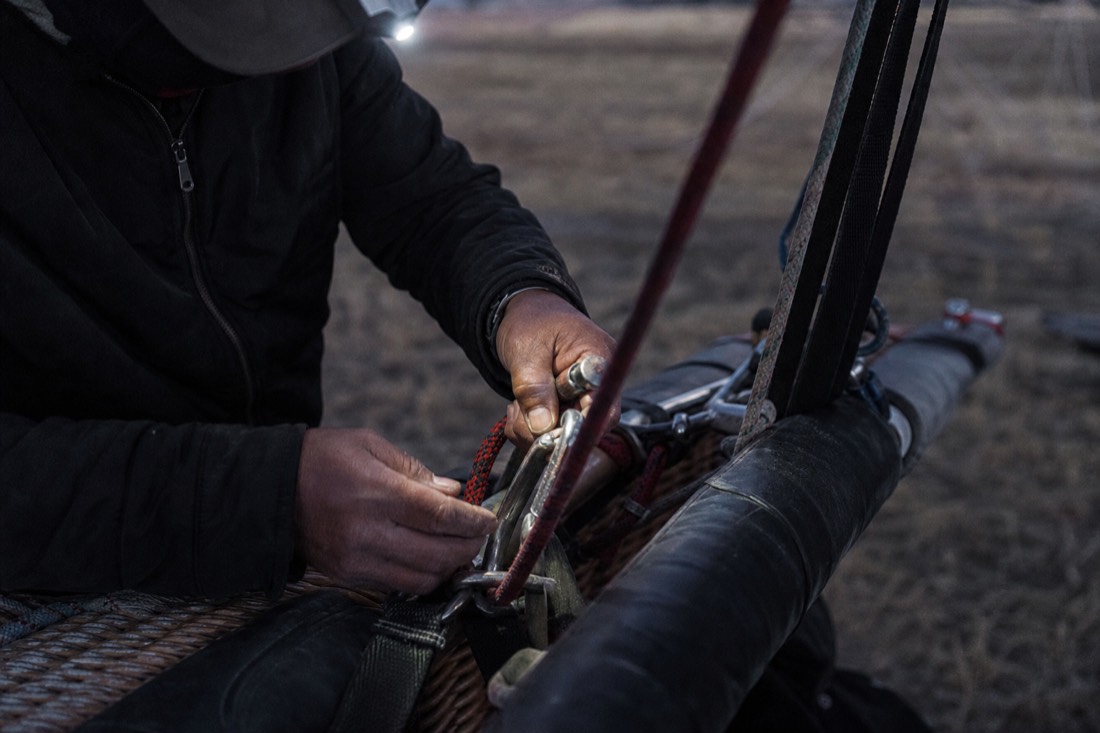
| The envelope and basket | A visual inspection of the fabric and rigging before every inflation, which is why crews arrive well before passengers. |
| Passenger briefing | Boarding, standing position and the landing brace, explained before the balloon leaves the ground, repeated again before descent. |
| Weight and balance | Passenger weights collected at booking or check-in, used to distribute people around the basket rather than left to chance. |
Reading an operator's safety signals before you book
You cannot inspect a pilot's licence from a booking page, but a listing tells you more than people assume if you know where to look.
| Signal | What it tells you |
|---|---|
| Review count in the thousands, not dozens | A large sample of passengers who flew and came back to leave a rating is the strongest indirect safety signal a listing carries |
| A stated weather or cancellation policy | Operators who publish what happens when they cannot fly are the ones taking the weather call seriously rather than pushing to fly regardless |
| Years in operation | Vuelos en Globo, Volare, We Fly and Sky Balloons have all been flying this valley for years; a brand-new listing with no history is a reason to look closer, not necessarily a reason to avoid it |
| Specific inclusions, not vague ones | A listing that states the exact pickup window, flight duration and what happens on cancellation is generally the more professionally run operation |
Safety questions people ask
Are Teotihuacan hot air balloons safe?
They operate under AFAC, Mexico's federal civil aviation authority. Commercial pilots must hold a valid AFAC free-balloon licence and a current medical certificate, and passenger insurance is legally required rather than optional. Operators ground flights in unsafe wind or rain and offer a reschedule or refund instead. Those requirements apply equally to the cheapest and the most expensive operator flying this valley.
Has there been an accident at Teotihuacan?
We could not verify a specific accident record from a primary or reputable source, and we will not state a safety record we cannot evidence. What we can say is that no operator or authority publishes accident or cancellation statistics for this location, so any page quoting you a percentage has invented it.
What happens if the wind picks up mid-flight?
The pilot lands. Balloons cannot steer laterally, only up and down to find a different wind layer, so the response to deteriorating conditions is to bring the flight down early. A shorter flight than advertised is the system working, not a failure of it.
Is there a parachute or emergency equipment?
No, and there is no meaningful use for one at the altitudes involved. Balloon safety works through not flying in bad conditions, licensed pilots, and controlled descent. The envelope itself acts as a very large parachute in the event of burner failure, which is why balloons descend rather than fall.
Can I fly with a heart condition or reduced mobility?
Talk to the operator before booking. The hard requirement is standing unassisted for the full flight and bracing for the landing, which rules out a lot of mobility limitations. Some operators ask for medical clearance for older passengers. The altitude is worth mentioning to a doctor too: the valley floor is already 2,121 m above sea level before the balloon leaves the ground.
Are the cheaper flights less safe?
Not in any way you can establish from a price. Every commercial operator here flies under the same AFAC licensing requirement with the same mandatory passenger insurance. Price differences reflect what is bundled: transport from Mexico City, breakfast, a guide, entry to the archaeological zone.
Plan your morning above Teotihuacan
Check the outing that fits your day
Initial editorial choice, not a personalized eligibility check. Confirm the operator’s full requirements before booking.
Is your group comfortable flying, and when?
This screens only the details you enter. Health, pregnancy, the 220 to 308 lb balloon surcharge band, language, pickup zones and all remaining restrictions still need operator confirmation. Time allowances include check-in and travel where the listing states them.
- Balloon flight with CDMX pickup, cave breakfast and pyramids visit. The full sunrise sequence in one booking: flight, cave breakfast and the ruins walked with a guide. About 4 to 7 hours door to door; pickup between 4:20 and 5:10 a.m. Shared basket; you climb into the basket. Site entry fee is extra. Over 100 kg (220 lb) up to 120 kg costs MXN 500 more; over 120 kg up to 140 kg costs MXN 1,000 more, per the listing. Weather moves or cancels flights.
- Teotihuacan balloon flight with optional pyramids tour. The simplest way to book the flight itself, with add-ons only if you want them. 50-minute flight; half-day to full experience depending on options. The pyramids tour and transport are options, not defaults; check what your selected option includes. Operator age limits need confirming on the listing before booking young children.
- Teotihuacan early-access private half-day tour. Keeps the empty-early-morning experience on the ground for travelers who will not fly or cannot take the 4 a.m. pickup. Roughly half a day; the listing describes an 8:00 to 11:15 a.m. visiting window plus transport. A ground tour: the zone at opening, not a balloon. It occupies the same morning window a balloon flight would, so this is an alternative, not an add-on to a flight the same day.
Compare your actual party totals
Enter current quotes in the same currency. “Separate spending” means costs you would actually avoid, not a day you still pay for.
Balloon flight with CDMX pickup, cave breakfast and pyramids visit
Have a travel date in mind? Check it before arranging the rest of the day. The full sunrise sequence in one booking: flight, cave breakfast and the ruins walked with a guide.
About 4 to 7 hours door to door; pickup between 4:20 and 5:10 a.m. Balloon flight, toast and flight certificate, optional underground-cave breakfast, about 1.5 hours in the archaeological zone, transport from Mexico City when selected.
Shared basket; you climb into the basket. Site entry fee is extra. Over 100 kg (220 lb) up to 120 kg costs MXN 500 more; over 120 kg up to 140 kg costs MXN 1,000 more, per the listing. Weather moves or cancels flights.
Schedule loading. You can still check dates directly on Viator below.
Scheduled dates are not confirmed seats. Select the same date on Viator to confirm availability and the final price.