Can you climb the pyramids at Teotihuacan?
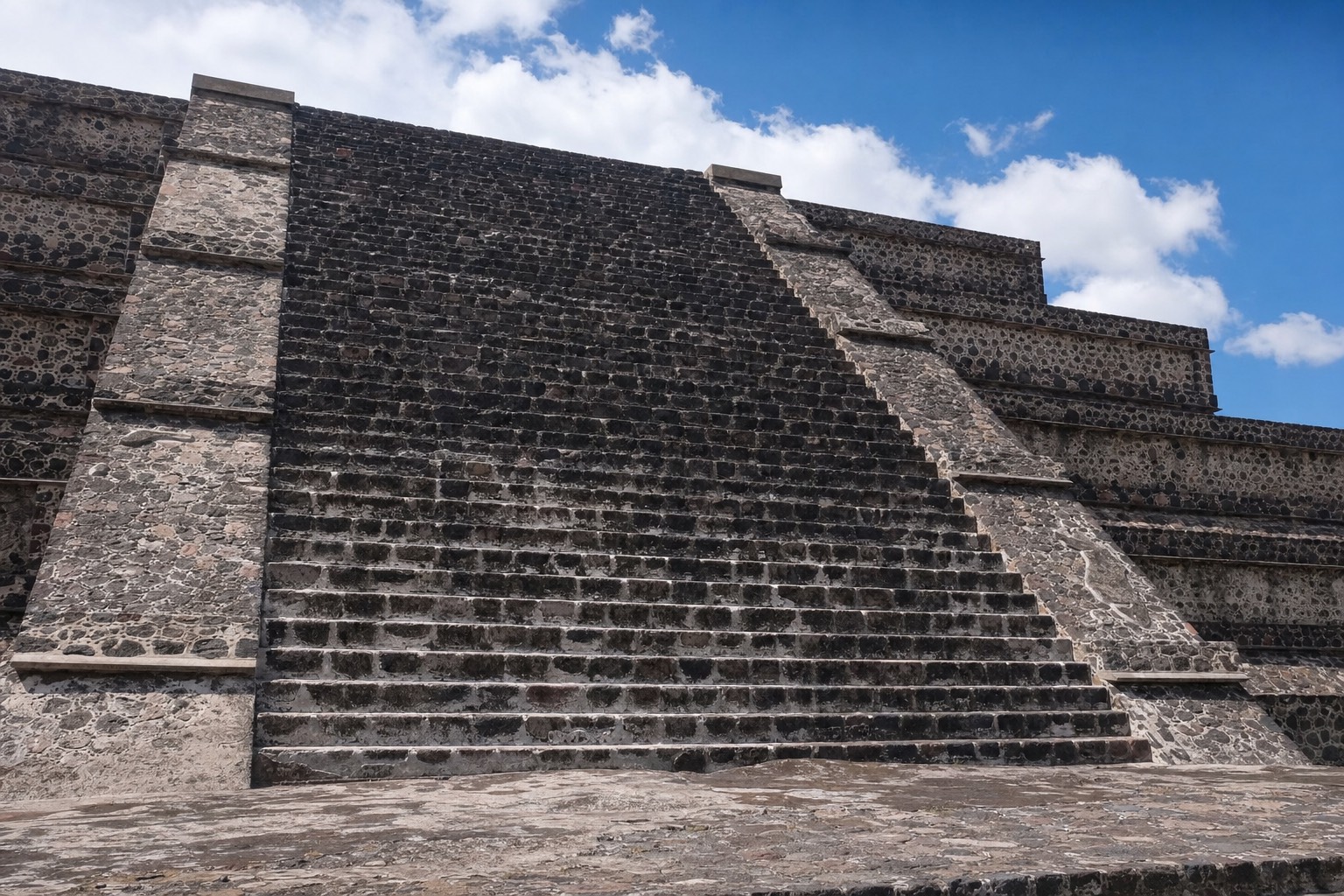
The photographs of people on the summit are old. The steps are closed, and they are staying closed.
 By Alejandro Ramírez, Teotihuacan hot air balloon specialist and experience guide
Short answer
No. Climbing the Pyramid of the Sun and the Pyramid of the Moon is no longer permitted. You can still walk the full two-kilometre Avenue of the Dead, enter the Ciudadela and the Temple of the Feathered Serpent, see the surviving murals and visit the site museum, all at ground level. The archaeological zone opens 08:00 to 17:00 with last access at 16:30, and entry is 210 MXN for foreign visitors, 105 MXN for Mexican nationals and residents. The only remaining way to get height over the site is from the air.
This is one of the most-asked questions about Teotihuacan and the internet is still full of photographs that make it look open. Those photographs predate the current rules.
Booking choice
Since the summits closed, the aerial view is the only height left over Teotihuacan, and the most-booked flight pairs it with about ninety minutes on the ground in the same morning.
The current position
| Pyramid of the Sun | Climbing not permitted |
|---|---|
| Pyramid of the Moon | Climbing not permitted |
| Avenue of the Dead | Open, walkable end to end, about 2 km |
| Ciudadela and Temple of the Feathered Serpent | Open |
| Site museum and palace complexes | Open |
| Opening hours | 08:00 to 17:00, last access 16:30 |
| Entry fee | 210 MXN foreign visitors, 105 MXN Mexican nationals and residents; free on Sundays for nationals and residents |
| Managed by | INAH, the Instituto Nacional de Antropología e Historia |
Why the steps closed
Two pressures, both straightforward.
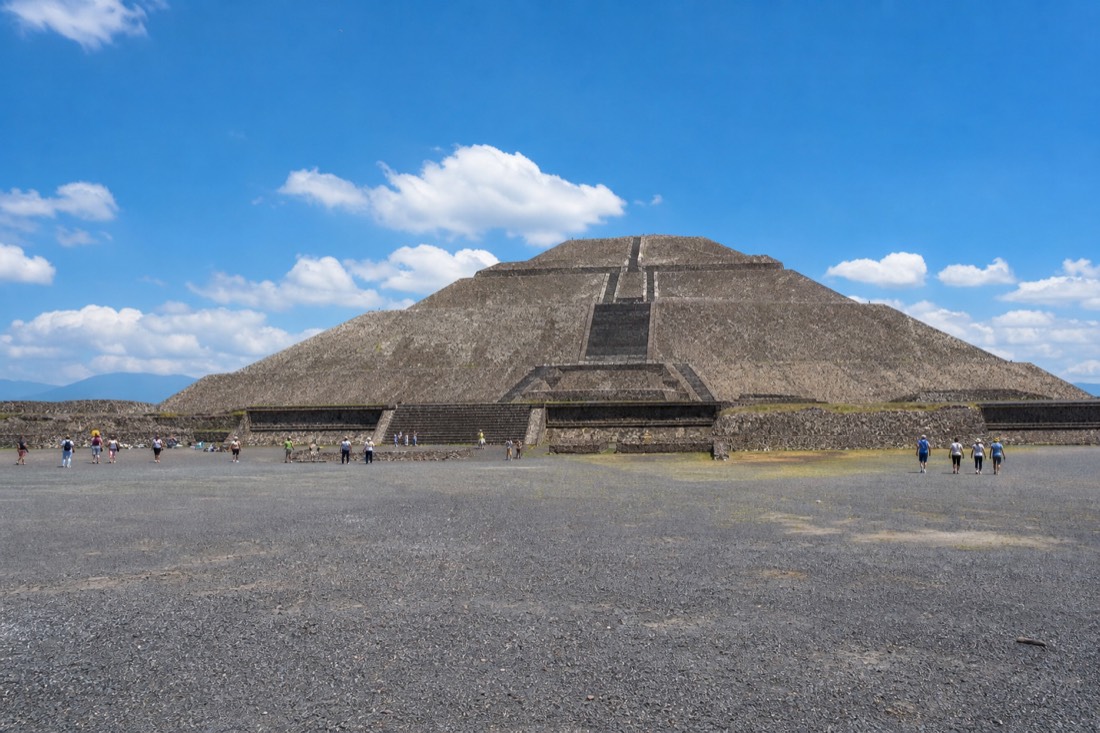
Wear. Teotihuacan is the most visited archaeological site in Mexico. Millions of feet on 2,000-year-old stone stairways does measurable damage, and unlike a floor you cannot replace the treads. The Pyramid of the Sun is 65 metres high with a steep, uneven staircase that was never built for a queue.
Safety. Those steps are narrow, high-risered and slippery in rain, at an altitude of 2,121 metres where visitors are already more breathless than they expect. Managing a two-way flow of tens of thousands of people up and down them is a genuinely hard problem.
The pattern is not unique to Mexico. Chichén Itzá closed El Castillo years ago for the same reasons, and Uluru in Australia closed for different but related ones. Ancient monuments that used to be climbable are steadily becoming things you look at.
What you can still do, which is a lot
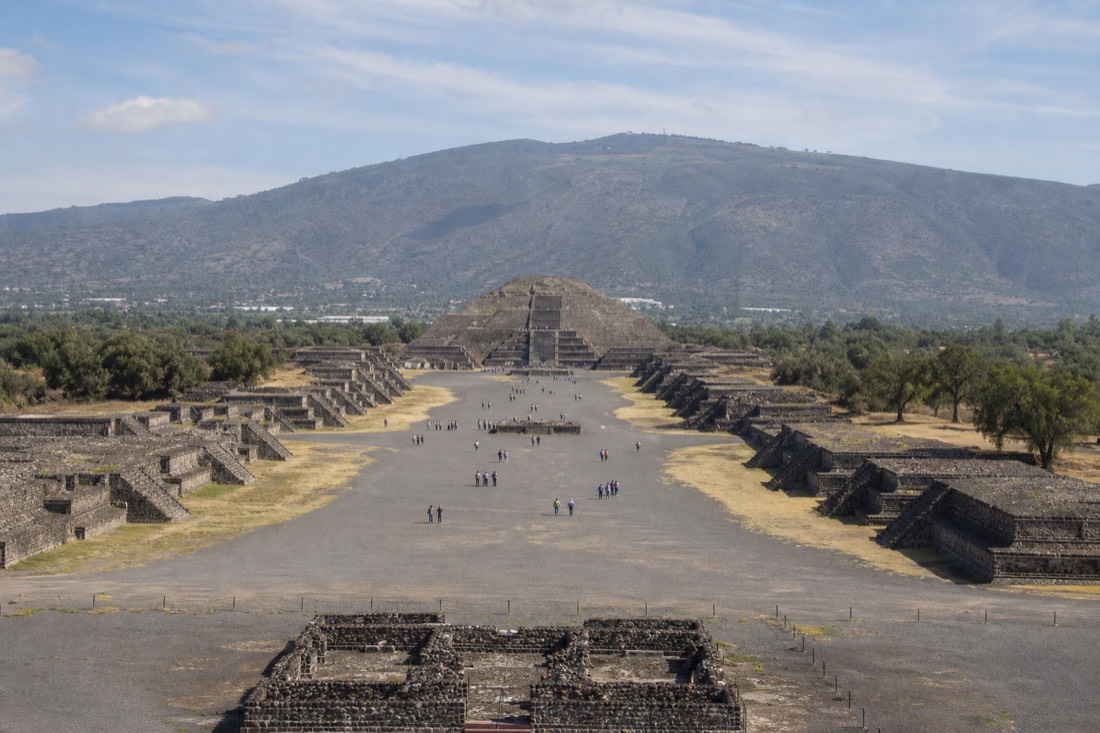
Do not let the ban put you off the site. Teotihuacan at ground level is enormous and most of it is open.
- Walk the Avenue of the Dead, the full two kilometres from the Ciudadela to the Pyramid of the Moon. This is the spine of the city and walking it is the single best way to feel its scale.
- The Temple of the Feathered Serpent in the Ciudadela, with its facade of carved serpent and Tláloc heads. This was deliberately buried by a later structure, which is why it survives at all.
- The palace complexes, including Quetzalpapálotl, where you can see surviving murals and carved pillars up close.
- The site museum, which is where the finds from the tunnels and burials are, and where the scale model makes the layout click.
- The plazas at the base of both pyramids, which are open and give you the buildings from below.
The hours you actually need covers how to fit that into a morning, and the pyramid add-on guide explains what the guided balloon packages include on the site.
Open versus closed, structure by structure
| Pyramid of the Sun staircase | Closed to climbing |
|---|---|
| Pyramid of the Moon staircase | Closed to climbing |
| Both pyramid plazas at ground level | Open |
| Avenue of the Dead | Open, full length |
| Ciudadela and Temple of the Feathered Serpent facade | Open |
| Quetzalpapálotl palace complex | Open |
| Site museum | Open |
| Tunnels beneath the Pyramid of the Sun and the Ciudadela | Closed; active excavation, not a visitor route |
That is a longer "open" list than the climbing ban suggests at first glance. The parts of Teotihuacan that made it worth visiting before the ban, the scale, the axis, the carved facades, are still fully accessible. What is gone is a single vantage point at the top of one building, and the balloon flights exist largely to replace exactly that.
Visitors who arrive expecting the climb to still be possible are almost always relying on an old blog post, a friend's photo from years ago, or a search result that has not been updated. None of those are reliable for a rule that changed. Checking a page dated within the last year or two, or simply asking at the gate, avoids the disappointment of planning around a summit view that will not happen.
The one way left to get height
Since the summits closed, the elevated view of Teotihuacan is only available from the air. That is not a marketing line, it is arithmetic: there is no hill inside the zone, no viewing tower, and no drone flying you are allowed to do.
Which is why the balloon flights have become the thing they are. From a kilometre up at sunrise you see the whole plan at once: the axis, the alignment of the Pyramid of the Sun with Cerro Gordo behind it, the Ciudadela at the far end. That is a view that used to require climbing 248 steps and now requires getting up at four. We compare the two ways of experiencing the site in balloon versus walking, and set out honestly what the balloon does and does not show you.
That is the whole reason these flights exist as a category rather than a novelty, and it is why the flight that includes about ninety minutes inside the archaeological zone is the version most people book: you get the view from above and the walk at ground level in the same morning.
Will it reopen?
Nothing suggests so. The trend at heavily visited heritage sites runs one way, and the conservation argument does not get weaker as visitor numbers grow. Plan for the site as it is rather than hoping.
If you have old photographs from the summit, or a relative who climbed it in the nineties, you have something that cannot be repeated. That is worth a moment on the plaza at the bottom.
What replaced the summit view, in order
| Before the ban | Visitors climbed the Pyramid of the Sun's staircase and looked down over the valley from roughly 65 metres up |
|---|---|
| After the ban, before balloons were common | The elevated view was simply gone; visitors experienced the site entirely at ground level |
| Now | A sunrise balloon flight is the only way to see the site's layout from above, at a greater height and a wider view than the old summit ever offered |
A checklist for the ground-level route
With the climb off the table, the walking route is where the visit actually happens. This is the version worth doing properly.
| Enter at the Ciudadela | See the Temple of the Feathered Serpent's carved facade while you are fresh |
|---|---|
| Walk the full Avenue of the Dead | About 2 km; this is the axis the whole site is built around |
| Stand at the base of both pyramids | The plazas are open even though the stairs are not |
| Visit the site museum | Where the finds from the tunnels and burials are displayed, and the scale model that makes the layout click |
| Bring water and a hat | There is no shade anywhere on the route |
Questions about climbing
Can you still climb the pyramids in Teotihuacan?
No. Climbing the Pyramid of the Sun and the Pyramid of the Moon is no longer permitted. Photographs online showing people on the summit predate the current rules. You can walk the site, the Avenue of the Dead and the Ciudadela at ground level.
Can you walk up the Teotihuacan pyramids at all?
No. The staircases on both major pyramids are closed to visitors. Some lower platforms and plaza structures elsewhere on the site remain accessible, but the summits are not.
Can you go inside the Teotihuacan pyramids?
No. The tunnels under the Pyramid of the Sun and beneath the Temple of the Feathered Serpent are active archaeological excavations, not visitor routes. The finds from them are displayed in the site museum.
Why did they ban climbing?
Conservation and safety. Teotihuacan is the most visited archaeological site in Mexico, and millions of visitors on 2,000-year-old stone stairs cause irreversible wear. The steps are also steep, narrow and slippery when wet, at an altitude where visitors tire faster than they expect.
Is Teotihuacan still worth visiting if you cannot climb?
Yes. The site is vast and almost all of it is open: two kilometres of avenue, the Ciudadela, the Temple of the Feathered Serpent, the palace murals and the museum. What the ban removed is the elevated view, and the balloon flights now supply that instead.
Which pyramids in Mexico can you still climb?
Rules vary site by site and change, so check the specific site with INAH before travelling rather than relying on an old blog post. At Teotihuacan and Chichén Itzá, the major pyramids are closed to climbing.
Plan your morning above Teotihuacan
Check the outing that fits your day
Initial editorial choice, not a personalized eligibility check. Confirm the operator’s full requirements before booking.
Do you want the height, the ground, or both?
This screens only the details you enter. Health, pregnancy, the 220 to 308 lb balloon surcharge band, language, pickup zones and all remaining restrictions still need operator confirmation. Time allowances include check-in and travel where the listing states them.
- Balloon flight with CDMX pickup, cave breakfast and pyramids visit. The full sunrise sequence in one booking: flight, cave breakfast and the ruins walked with a guide. About 4 to 7 hours door to door; pickup between 4:20 and 5:10 a.m. Shared basket; you climb into the basket. Site entry fee is extra. Over 100 kg (220 lb) up to 120 kg costs MXN 500 more; over 120 kg up to 140 kg costs MXN 1,000 more, per the listing. Weather moves or cancels flights.
- Private Teotihuacan tour from Mexico City with entry tickets. A private guide and door-to-door transport for the pyramids themselves, on a day you keep for the ground. Roughly 5 to 6 hours door to door; confirm on the listing. Adult price bands start at 18 per the listing; child pricing applies up to about 7 years. A ground tour, not a flight.
- Teotihuacan early-access private half-day tour. Keeps the empty-early-morning experience on the ground for travelers who will not fly or cannot take the 4 a.m. pickup. Roughly half a day; the listing describes an 8:00 to 11:15 a.m. visiting window plus transport. A ground tour: the zone at opening, not a balloon. It occupies the same morning window a balloon flight would, so this is an alternative, not an add-on to a flight the same day.
Compare your actual party totals
Enter current quotes in the same currency. “Separate spending” means costs you would actually avoid, not a day you still pay for.
Balloon flight with CDMX pickup, cave breakfast and pyramids visit
Have a travel date in mind? Check it before arranging the rest of the day. The full sunrise sequence in one booking: flight, cave breakfast and the ruins walked with a guide.
About 4 to 7 hours door to door; pickup between 4:20 and 5:10 a.m. Balloon flight, toast and flight certificate, optional underground-cave breakfast, about 1.5 hours in the archaeological zone, transport from Mexico City when selected.
Shared basket; you climb into the basket. Site entry fee is extra. Over 100 kg (220 lb) up to 120 kg costs MXN 500 more; over 120 kg up to 140 kg costs MXN 1,000 more, per the listing. Weather moves or cancels flights.
Schedule loading. You can still check dates directly on Viator below.
Scheduled dates are not confirmed seats. Select the same date on Viator to confirm availability and the final price.