Do balloons fly directly over the Teotihuacan pyramids?
The marketing photographs are shot with long lenses from the ground. What you get from the basket is different, and honestly better.
 By Alejandro Ramírez, Teotihuacan hot air balloon specialist and experience guide
Short answer
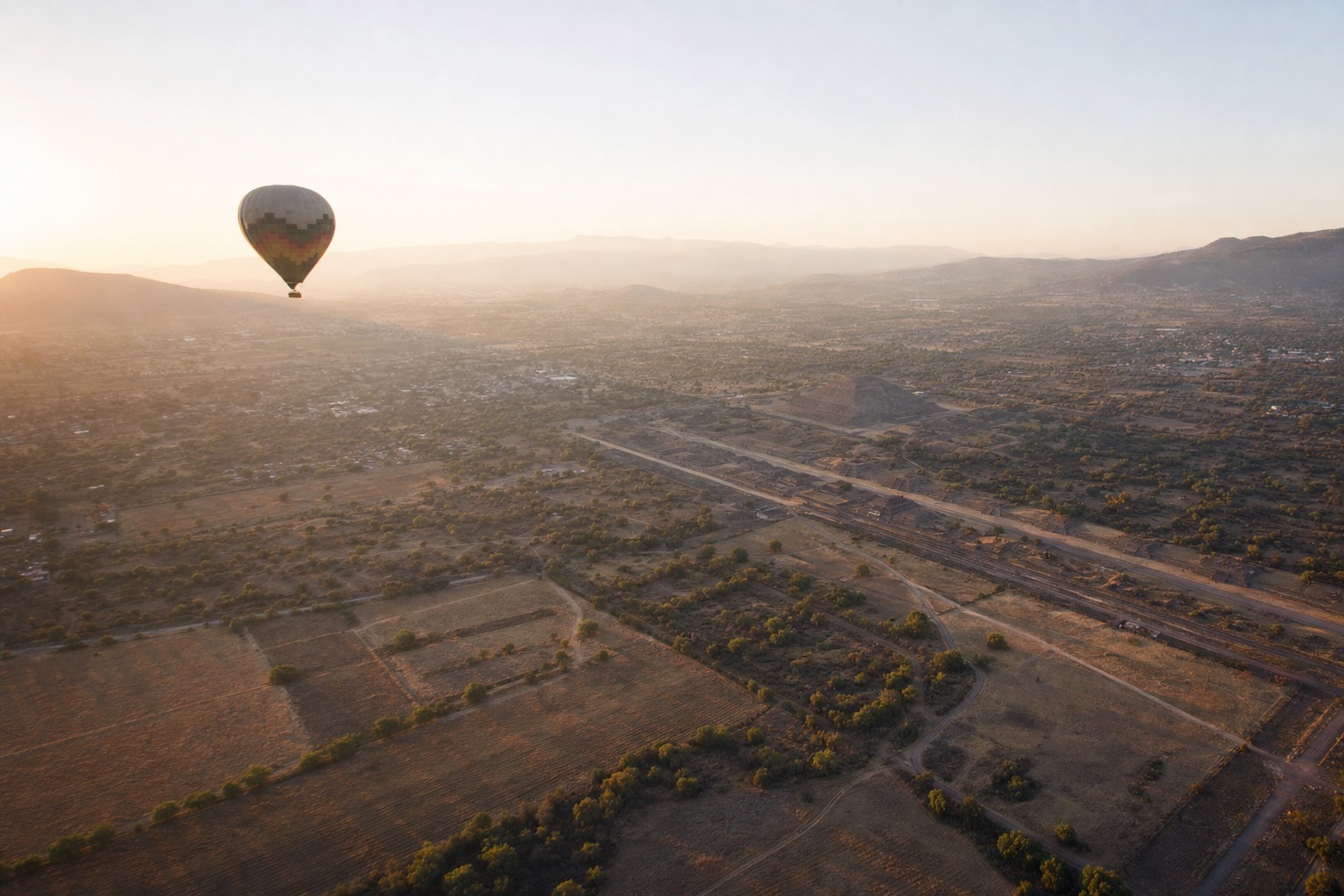
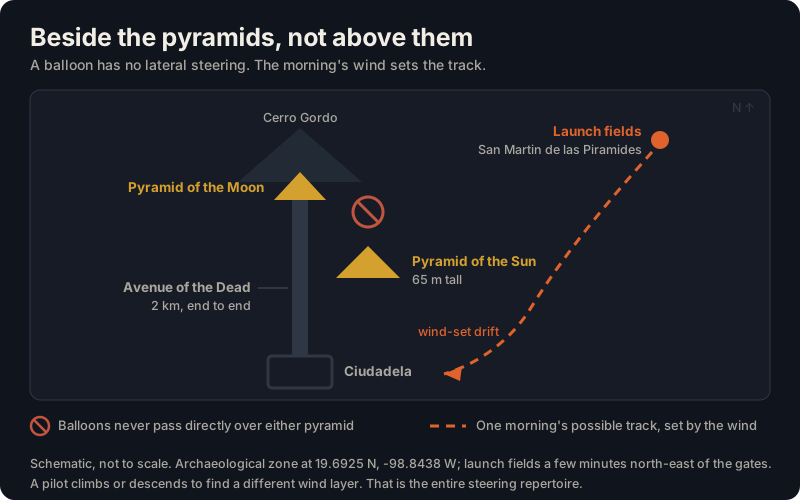
No. Balloons launch from fields near San Martín de las Pirámides and fly beside and around the archaeological zone, not directly above the Pyramid of the Sun or the Pyramid of the Moon. A balloon cannot steer, only climb and descend to find a different wind layer, so no operator can promise a position overhead. What you do see is both pyramids, the full two-kilometre Avenue of the Dead, the Ciudadela, and the ring of mountains the city was aligned to.
Somebody arrives expecting to hang above the Pyramid of the Sun and look straight down the staircase. They have seen the photograph. It exists, and it was taken from the ground with a long lens that compressed a balloon two kilometres away into apparent contact with the pyramid behind it.
Booking choice
No balloon flies over the pyramids, and every honest listing sells the valley view instead. The most-reviewed flight pairs that view with the van, the breakfast and the guided ground portion.
Here is what actually happens.
Where the balloons are, relative to the pyramids
| Launch site | Fields at San Martín de las Pirámides, minutes from the archaeological zone gate |
|---|---|
| Flight path | Beside and around the zone, set by whatever the wind is doing that morning |
| Directly overhead the pyramids? | No |
| Both pyramids visible? | Yes |
| Steering available to the pilot | Vertical only: climb or descend to catch a different wind layer |
| Published cruising altitude | We Fly publishes a working range of 1,000 to 2,000 m above ground; a good deal of the flight is spent lower over the valley floor |
| Pyramid of the Sun height | 65 m |
| Valley floor elevation | 2,121 m above sea level |
Why the wind, not the pilot, decides
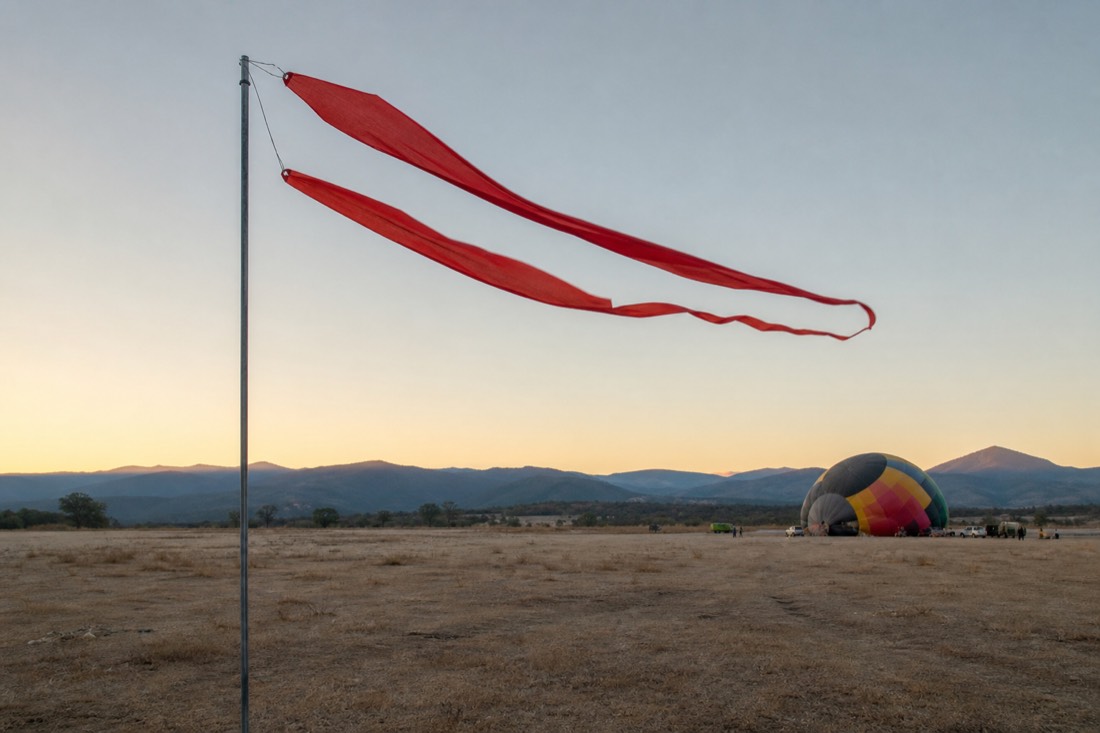
This is the part worth understanding, because it explains every "will I see the pyramids" question at once. A hot air balloon has no lateral propulsion. None. It moves at exactly the speed and direction of the air it sits in.
What a pilot can do is change altitude, because wind speed and direction differ at different heights. Climb a few hundred metres and you may find air moving thirty degrees off the surface wind. That is genuine skill and it is how a good pilot steers a landing, but it is closer to sailing a current than driving. Nobody can commit to a track over a specific 65-metre building.
Which is why every honest operator describes the flight as being over the Teotihuacan valley rather than over the pyramids. Read the listings carefully and you will notice they all say the valley.
What you actually see, which is more
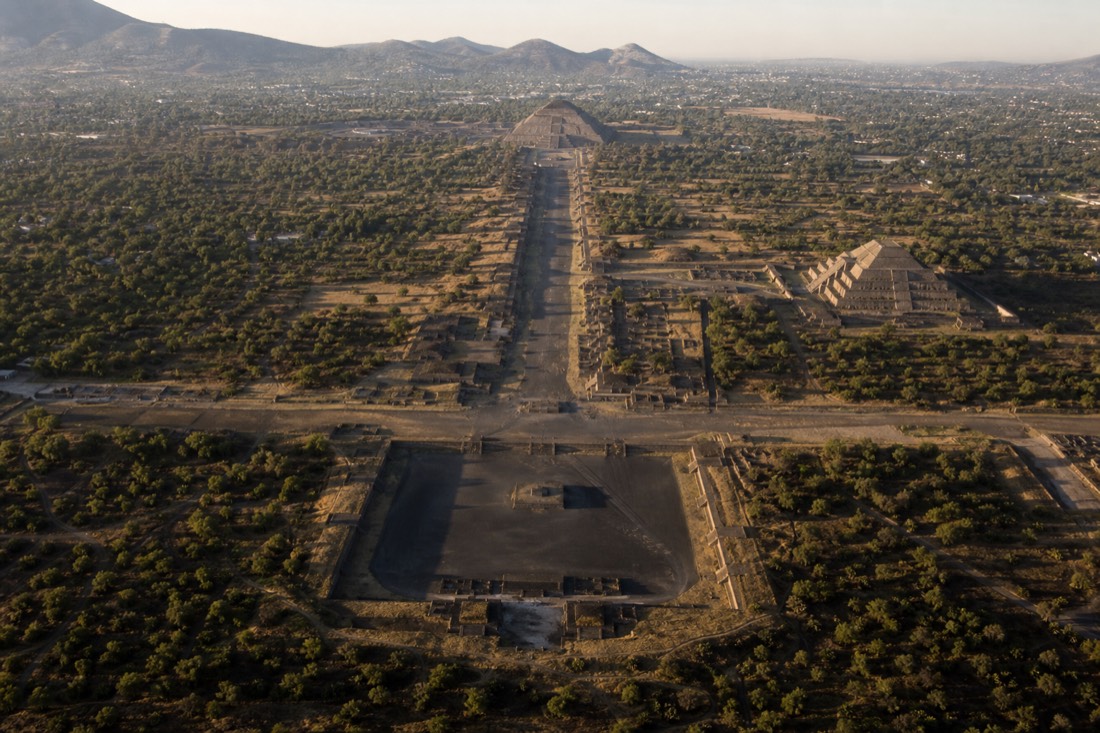
The oblique view is not a consolation prize. It is the view that shows you what Teotihuacan was.
From a kilometre out at low altitude you get the entire plan in one frame. The Pyramid of the Moon closing the north end. The Avenue of the Dead running two kilometres south. The Pyramid of the Sun set off the eastern side, its silhouette echoing Cerro Gordo behind it. The Ciudadela at the far end. And, if the light is doing its job, low sun raking across the terraces so every step edge throws a shadow.
From directly overhead, a pyramid is a square. The alignment, the axis, the deliberate relationship between the buildings and the mountains: all of that is only legible from an angle. This is the thing the balloon gives you that no ground visit can, and it is also why the flight is worth doing since climbing the pyramids was banned. More on the experience in what you actually see from the basket.
Does this change which flight to book?
Not really, and that is worth saying plainly, because it is a question people waste time on. Every balloon launching that morning goes up from the same fields into the same air. Your track is the morning's wind, not your operator's route planning.
What does differ between listings is everything on the ground: hotel pickup or a meeting point, breakfast in a cave or a hall, whether the archaeological zone is bundled in. Those are the real choices and the comparison page lays them out. If a listing promises a specific overhead position, that is a reason for suspicion rather than a reason to book it.
The listings we track describe the flight honestly as being over the valley, which is what it is. The 7,400-plus-review Viator flight and the $159 GetYourGuide option both put you in the same air on the same morning, so pick on the ground arrangements rather than on a promised flight path.
The photographs, honestly
If your reason for booking is a specific image you saw, calibrate. The shots of a balloon apparently touching a pyramid are ground shots. The shots from inside a basket show a valley, a couple of pyramids at middle distance, other balloons, and very good light.
That second set is genuinely beautiful and much harder to take badly. The photography guide covers what works from a moving basket with a rail full of people.
How the morning's wind changes what you actually see
Because the track is set entirely by the wind, no two flights are identical, but the range of what you can expect is narrower than that sounds.
| Light, steady wind (the common case) | A gentle drift beside the zone, both pyramids clearly in frame for most of the flight, other balloons visible at similar altitude |
|---|---|
| Very light or near-still air | The balloon barely drifts from the launch field; the pilot uses altitude changes to find any usable air, and the valley view is still excellent |
| Stronger dawn wind | A faster drift, potentially further from the zone; this is also the condition most likely to shorten or delay the flight in the first place |
None of these change whether you see the valley's layout, only how close and for how long. The complaint about missing golden hour is almost always about the second scenario, when a delayed launch pushes the flight past the best light rather than about the wind direction itself.
What determines the flight path, and what a guide explains before you ask
Alejandro's role since 2015 has been coordinating the ground side of these mornings, not flying the balloon, and one of the most common questions he fields before boarding is some version of "will we go over the pyramids." The honest answer he gives every time is the one this guide gives: nobody can promise that, because the wind decides, and pretending otherwise would be setting people up to feel let down by something no operator controls. What he can tell passengers with confidence is the shape of the view they will get: the whole valley, both pyramids, the avenue between them, and a vantage point that has not been available from the ground since the pyramids closed to climbers.
Common misconceptions, corrected
| "The balloon flies you directly over the Pyramid of the Sun" | No. It flies beside and around the zone, at a distance the wind sets. |
|---|---|
| "You choose your flight path when you book" | No booking includes a route. Every balloon that morning is subject to the same wind. |
| "A more expensive listing gets you closer" | No. Price differences reflect transport, breakfast and guiding, not flight path. |
| "The pilot can steer toward the pyramids if asked" | Only vertically, by changing altitude to catch a different wind layer. There is no lateral steering. |
Questions about the flight path
Do hot air balloons fly over the Pyramid of the Sun?
No. Balloons launch from fields near San Martín de las Pirámides and fly beside and around the archaeological zone. A balloon cannot steer laterally, so no operator can promise a position over a specific building. You see both pyramids and the whole valley layout from the air.
How close do balloons get to the pyramids?
It varies with the morning's wind and no operator publishes a distance. The practical answer is close enough that both pyramids and the full Avenue of the Dead are clearly visible and photographable, and far enough that you see the layout rather than one building.
Is there a flight that goes directly over the site?
No, and be wary of any listing implying otherwise. The constraint is physics rather than permissions: balloons go where the air goes. Every operator launching from this valley is subject to the same wind on the same morning.
How high do the balloons fly?
We Fly publishes a working range of 1,000 to 2,000 metres above ground level, though much of a typical flight is spent considerably lower over the valley floor. Balloons do not fly a fixed profile: the pilot changes altitude to find useful wind layers, so the height varies through the flight.
Can you see both the Pyramid of the Sun and the Pyramid of the Moon?
Yes. Both are visible from the air on a normal flight, along with the Avenue of the Dead running between them and the Ciudadela at the southern end. That combined view is the reason to go up.
Plan your morning above Teotihuacan
Check the outing that fits your day
Initial editorial choice, not a personalized eligibility check. Confirm the operator’s full requirements before booking.
Is the valley view the view you want?
This screens only the details you enter. Health, pregnancy, the 220 to 308 lb balloon surcharge band, language, pickup zones and all remaining restrictions still need operator confirmation. Time allowances include check-in and travel where the listing states them.
- Balloon flight with CDMX pickup, cave breakfast and pyramids visit. The full sunrise sequence in one booking: flight, cave breakfast and the ruins walked with a guide. About 4 to 7 hours door to door; pickup between 4:20 and 5:10 a.m. Shared basket; you climb into the basket. Site entry fee is extra. Over 100 kg (220 lb) up to 120 kg costs MXN 500 more; over 120 kg up to 140 kg costs MXN 1,000 more, per the listing. Weather moves or cancels flights.
- Teotihuacan balloon flight with optional pyramids tour. The simplest way to book the flight itself, with add-ons only if you want them. 50-minute flight; half-day to full experience depending on options. The pyramids tour and transport are options, not defaults; check what your selected option includes. Operator age limits need confirming on the listing before booking young children.
- Balloon flight, La Gruta cave breakfast and guided pyramids tour. The actual La Gruta restaurant, inside a lava cave, booked as part of the morning instead of gambled on walk-up. About 8.5 hours door to door. The archaeological-site entry ticket and lunch are not included. Bookings need at least one adult. Shared basket; you climb in. Weather moves or cancels flights.
Compare your actual party totals
Enter current quotes in the same currency. “Separate spending” means costs you would actually avoid, not a day you still pay for.
Balloon flight with CDMX pickup, cave breakfast and pyramids visit
Have a travel date in mind? Check it before arranging the rest of the day. The full sunrise sequence in one booking: flight, cave breakfast and the ruins walked with a guide.
About 4 to 7 hours door to door; pickup between 4:20 and 5:10 a.m. Balloon flight, toast and flight certificate, optional underground-cave breakfast, about 1.5 hours in the archaeological zone, transport from Mexico City when selected.
Shared basket; you climb into the basket. Site entry fee is extra. Over 100 kg (220 lb) up to 120 kg costs MXN 500 more; over 120 kg up to 140 kg costs MXN 1,000 more, per the listing. Weather moves or cancels flights.
Schedule loading. You can still check dates directly on Viator below.
Scheduled dates are not confirmed seats. Select the same date on Viator to confirm availability and the final price.