A Mexico City weekend built around one balloon morning
A three-day plan that puts the 4am balloon morning where it does least damage, pairs the pyramids with the anthropology museum, and leaves the evening you will actually be awake for.
 By Alejandro Ramírez, Teotihuacan hot air balloon specialist and experience guide
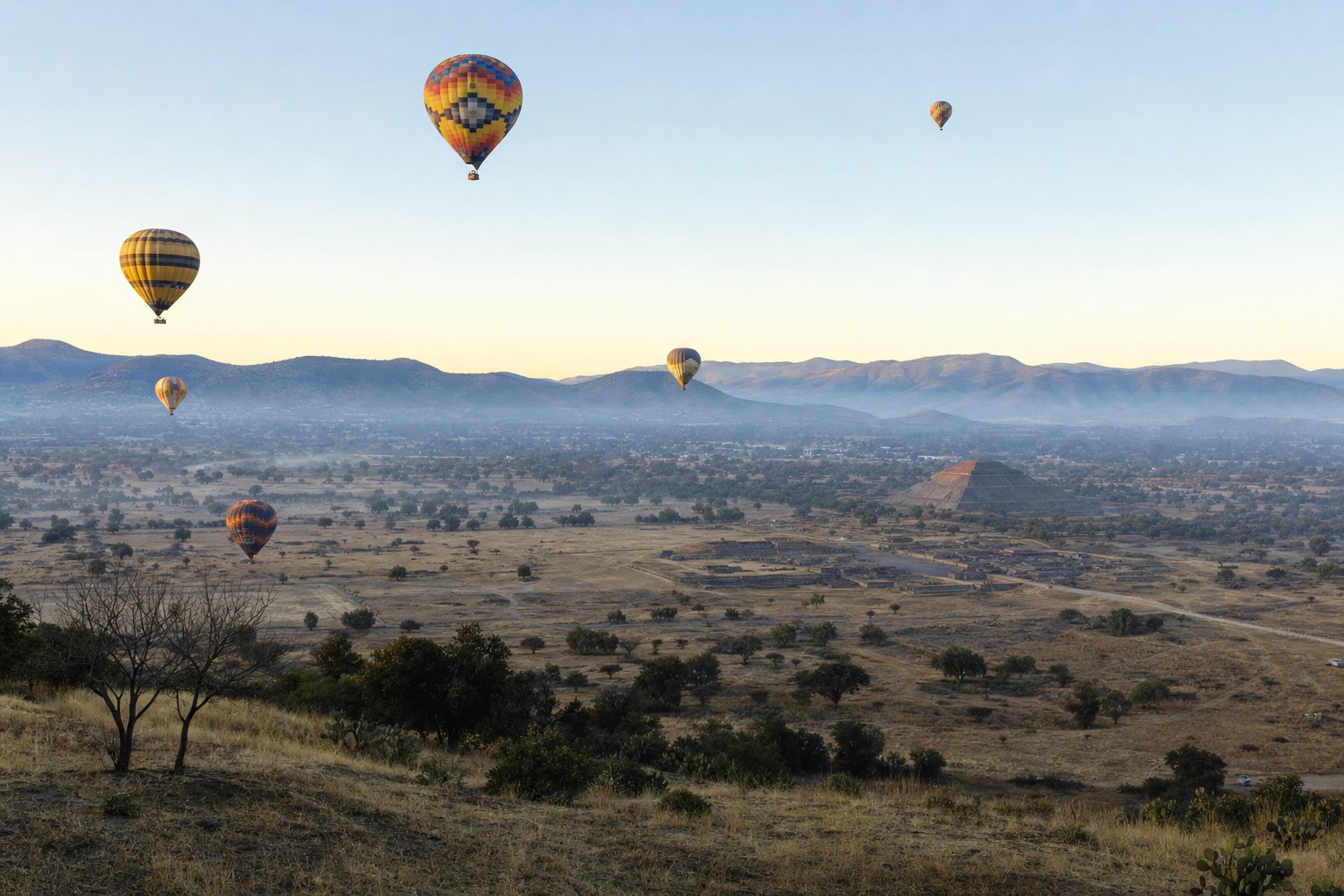
The balloon morning eats a day. Not the four hours the listing suggests: the whole day, because you have been awake since 3:45 and you are finished by four in the afternoon. Planning around that, rather than pretending it will not happen, is the difference between a good weekend and a tired one.
Booking choice
The weekend works when the balloon owns Saturday and Sunday stays spare: the most-reviewed flight books the morning, and free cancellation up to 24 hours keeps the plan adjustable.
Here is where it goes.
The shape
| Day | Morning | Afternoon | Evening |
|---|---|---|---|
| Friday | Arrive, Centro Histórico on foot | Templo Mayor and the Zócalo | Dinner in Roma or Condesa, early |
| Saturday | Balloon flight, pickup 4:20 to 5:10 a.m. | Back by ~2 p.m., sleep | Something undemanding nearby |
| Sunday | Museo Nacional de Antropología | Chapultepec, or Coyoacán | Fly out or one more dinner |
Why the balloon goes on the middle day
Three reasons, all practical.
Not day one. You will have flown in, possibly through a time zone, and Mexico City sits at 2,240 metres. A 3:45 alarm on top of that is a bad plan, and the altitude will already be affecting you more than you expect.
Not the last day. This is the important one. If weather grounds the flight, operators reschedule by preference, and a reschedule is worth nothing if you fly home the next morning. Putting the balloon on Saturday leaves Sunday as your second chance.
Because the afternoon is written off anyway. Saturday afternoon becomes a nap and a walk, which is fine, and it does not cost you a museum with timed entry.
Friday: the Centro, and an early night
Land, drop bags, walk. The Centro Histórico is compact and the Zócalo, the cathedral and the Templo Mayor are within a few blocks of each other. The Templo Mayor is the Aztec great temple, and seeing it first is genuinely useful preparation, because it sets up the fact that Teotihuacan is not Aztec and predates all of this by a thousand years.
Then eat early, which in Mexico City means fighting local habits. Dinner at nine is normal here and dinner at seven means an empty room. Do it anyway. You are getting up at 3:45.
Confirm your pickup neighbourhood before bed: the main listings collect from Reforma, Condesa, Roma, Polanco and the Centro Histórico, and if you are outside those you need to know now rather than at 4 a.m. The where to stay guide covers the zones.
If you are staying in one of them, the flight with door pickup is the one that makes Saturday work: you stand in the lobby and a van arrives.
Saturday: the balloon, then nothing
Alarm at 3:45. Lobby by 4:10. Van, an hour of dark motorway, then a launch field near San Martín de las Pirámides at six with envelopes going up around you in the half-light.
Take-off around 6:45, 30 to 60 minutes in the air, landing around eight. Breakfast. Then the archaeological zone from about ten, while the coaches from the city are still on the road. Back at your hotel by around two. The full timeline has the whole thing hour by hour.
Then sleep. Genuinely. Do not schedule a museum, a reservation or anything requiring concentration for Saturday evening. A walk in Condesa and a taco stand is the correct ambition.
Sunday: the museum that completes the pyramids
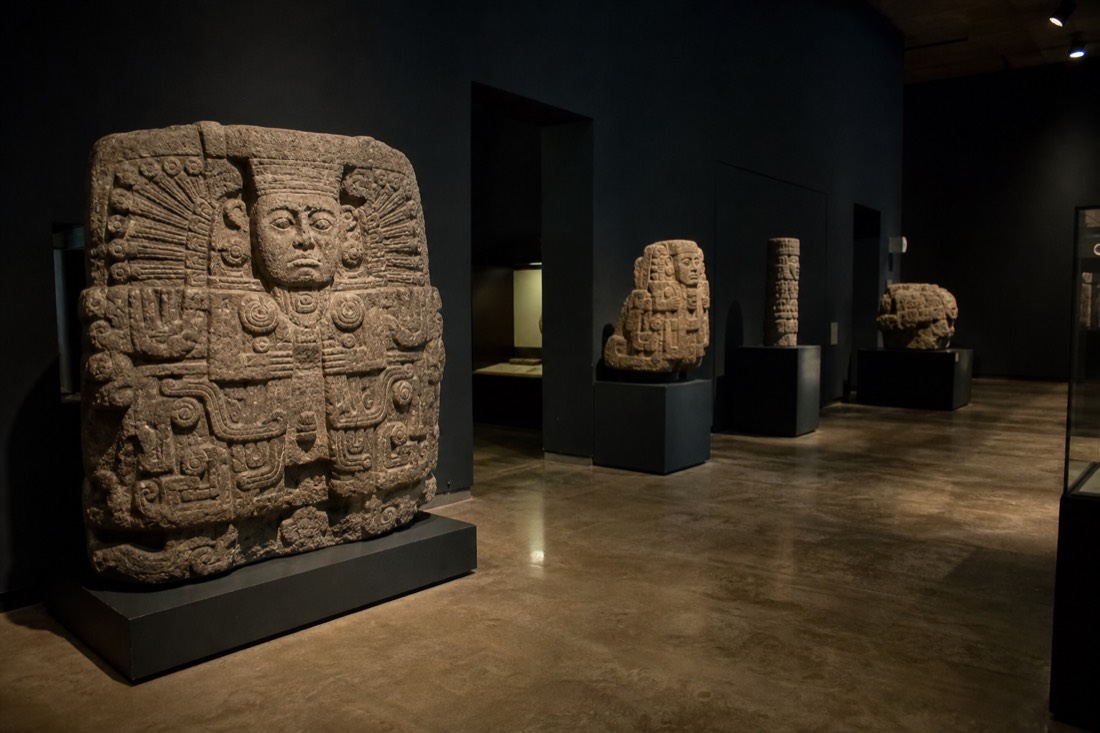
The Museo Nacional de Antropología in Chapultepec is where the finds from Teotihuacan live, along with everything else from Mesoamerica. Going the day after you have flown over the site and walked it is the right order: you arrive with a shape in your head that the museum then fills in.
Give it three hours minimum. The Teotihuacan hall alone, with the reconstructed facade of the Temple of the Feathered Serpent, justifies the trip. What makes the site significant is explained better here than anywhere on the site itself.
Afterwards, Chapultepec park if the weather is kind, or Coyoacán if you want somewhere to sit.
The variant for people who cannot do 4 a.m.
Move the balloon out of the weekend entirely. Stay near Teotihuacan on the Friday night, book a flight-only ticket direct with a Mexican operator, fly on Saturday from a 5:15 alarm, and spend Saturday properly at the site with fresh legs rather than at ninety minutes of it exhausted.
You lose a Mexico City evening and you gain the entire experience in a functional state. It is also cheaper on the flight, as the cost guide sets out.
The variant for a single day
If Teotihuacan is all you have time for, skip the balloon and take the daytime bus from Autobuses del Norte, which is cheap and easy. Give the site four hours. The ground-level version is a different city from the aerial one, and on one day it is the one that repays you more.
What not to do
Do not put the balloon on a day with an evening flight. Do not book a tasting menu for the night after it. Do not plan Xochimilco for the same afternoon, which people do constantly, and which turns a lovely thing into an endurance event.
And do not book the flight for Sunday if Sunday is also when you wanted to walk the archaeological zone independently: entry is free on Sundays for Mexican nationals and residents, which makes it the busiest day of the week at the site.
A packing list for the whole weekend
| For the balloon morning | Layers, closed flat shoes, a cross-body bag, sunglasses. The [what to wear guide](/guides/what-to-wear-teotihuacan-balloon-flight/) has the full list. |
|---|---|
| For the Friday and Sunday city days | Comfortable walking shoes for the Centro Histórico and Chapultepec, a light layer for the evening |
| For the museum | Nothing special; the Museo Nacional de Antropología is indoors and air-conditioned |
| Always | A phone charger and a portable battery: three days of navigation and photos drains a phone fast, and the balloon morning starts before hotel outlets are convenient |
Plan your morning above Teotihuacan
Check the outing that fits your day
Initial editorial choice, not a personalized eligibility check. Confirm the operator’s full requirements before booking.
Which day holds the balloon, and what holds the spare?
This screens only the details you enter. Health, pregnancy, the 220 to 308 lb balloon surcharge band, language, pickup zones and all remaining restrictions still need operator confirmation. Time allowances include check-in and travel where the listing states them.
- Balloon flight with CDMX pickup, cave breakfast and pyramids visit. The full sunrise sequence in one booking: flight, cave breakfast and the ruins walked with a guide. About 4 to 7 hours door to door; pickup between 4:20 and 5:10 a.m. Shared basket; you climb into the basket. Site entry fee is extra. Over 100 kg (220 lb) up to 120 kg costs MXN 500 more; over 120 kg up to 140 kg costs MXN 1,000 more, per the listing. Weather moves or cancels flights.
- Balloon ride with breakfast and central meeting-point transport. Fixed, simple logistics: one known central meeting point, no hotel-by-hotel pickup circuit. Morning into early afternoon; confirm timings on the listing. You reach the Angel de la Independencia meeting point on your own; that is not a hotel pickup. Confirm age limits on the listing.
- Balloon flight, La Gruta cave breakfast and guided pyramids tour. The actual La Gruta restaurant, inside a lava cave, booked as part of the morning instead of gambled on walk-up. About 8.5 hours door to door. The archaeological-site entry ticket and lunch are not included. Bookings need at least one adult. Shared basket; you climb in. Weather moves or cancels flights.
Compare your actual party totals
Enter current quotes in the same currency. “Separate spending” means costs you would actually avoid, not a day you still pay for.
Balloon flight with CDMX pickup, cave breakfast and pyramids visit
Have a travel date in mind? Check it before arranging the rest of the day. The full sunrise sequence in one booking: flight, cave breakfast and the ruins walked with a guide.
About 4 to 7 hours door to door; pickup between 4:20 and 5:10 a.m. Balloon flight, toast and flight certificate, optional underground-cave breakfast, about 1.5 hours in the archaeological zone, transport from Mexico City when selected.
Shared basket; you climb into the basket. Site entry fee is extra. Over 100 kg (220 lb) up to 120 kg costs MXN 500 more; over 120 kg up to 140 kg costs MXN 1,000 more, per the listing. Weather moves or cancels flights.
Schedule loading. You can still check dates directly on Viator below.
Scheduled dates are not confirmed seats. Select the same date on Viator to confirm availability and the final price.