What is so special about Teotihuacan
Not the size, though it was one of the largest cities on earth. The things that make Teotihuacan remarkable are its plan, its anonymity, its obsidian, and the fact that nobody knows why it burned.
 By Alejandro Ramírez, Teotihuacan hot air balloon specialist and experience guide
Plenty of ancient cities are big. Teotihuacan is big, and then it is four other things that are rarer.
Booking choice
The special thing is the plan, and the plan only assembles from above: the most-reviewed flight is the instrument that shows it, with the ground version handled by guides who can read it.
It was designed as one object
This is the point most visitors miss on the ground, and it is the reason the site is a UNESCO World Heritage Site, inscribed in 1987 under five separate criteria.
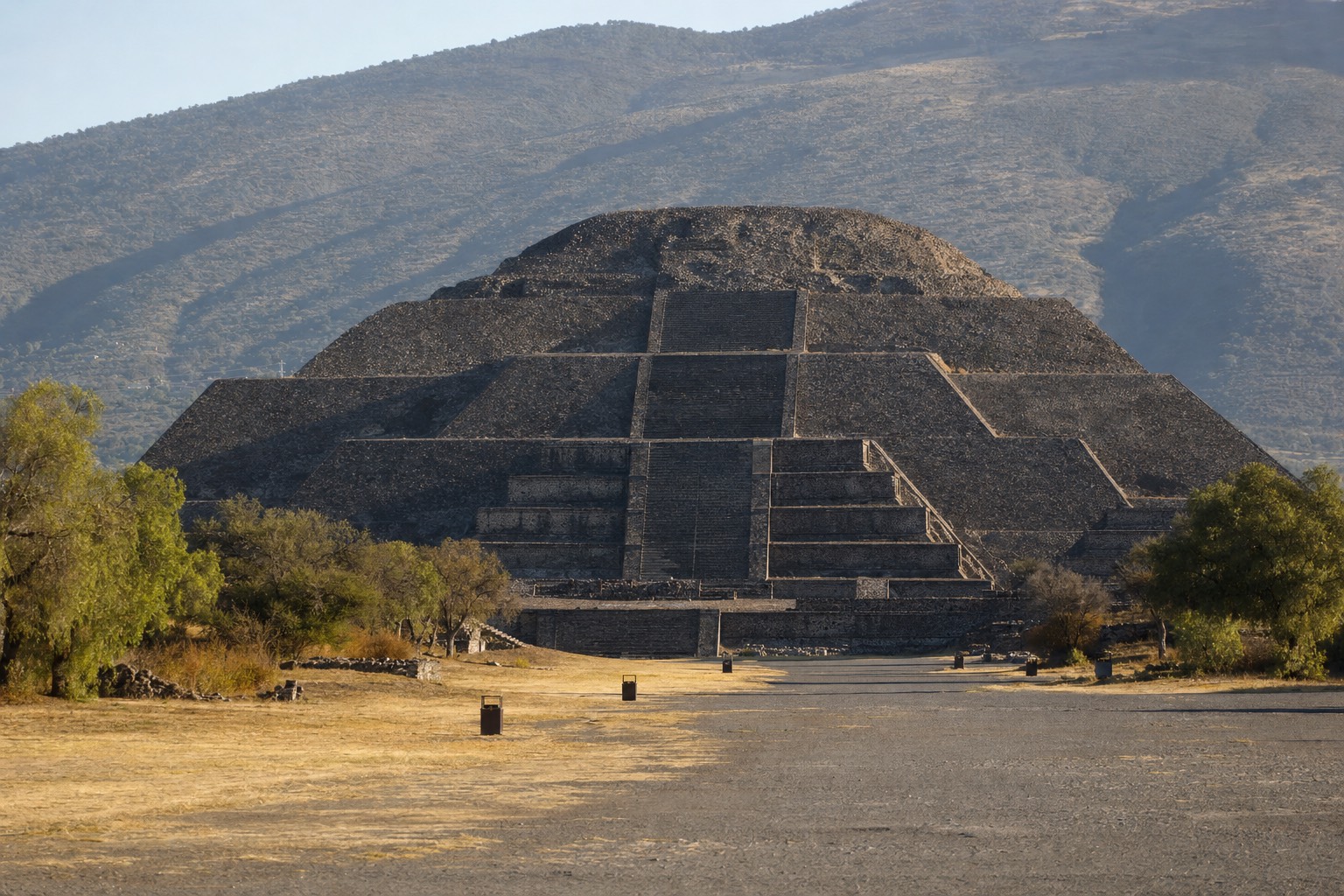
Teotihuacan was not a settlement that sprawled. It was laid out on a grid, oriented off true north by a consistent angle, with a two-kilometre ceremonial avenue as its spine. The Pyramid of the Moon closes the northern end, and behind it the mountain Cerro Gordo repeats its silhouette, which is almost certainly deliberate. The Pyramid of the Sun sits off the eastern side, 65 metres high. The Ciudadela anchors the south.
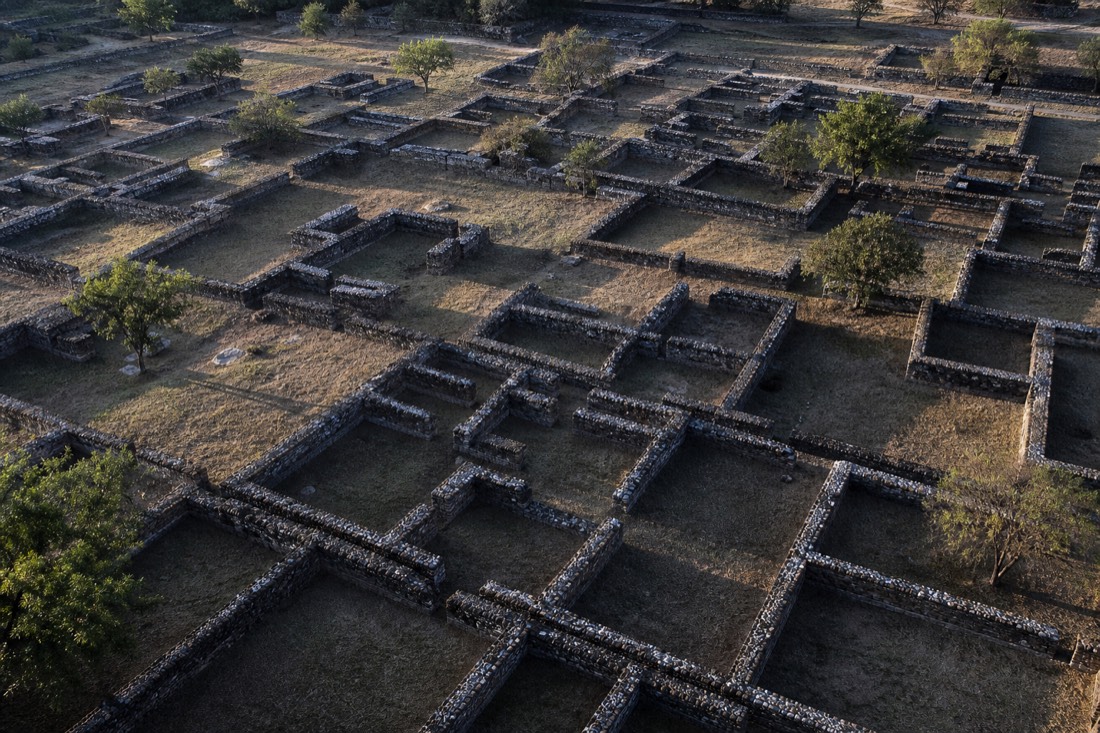
Whole residential districts were built to that grid, in standardised apartment compounds, housing tens of thousands of people. This is city planning at a scale Europe would not attempt again for a very long time.
You cannot see any of that from inside it. It assembles only from the air, which is what a sunrise balloon flight is actually for.
Nobody knows who built it
Teotihuacan left no king lists, no dynastic inscriptions, no monumental portraits of rulers. Compare that with Maya sites, which are covered in the names and dates of specific people.
The city's own name for itself is unknown. "Teotihuacan" is Nahuatl, given by the Aztecs who found the place already six hundred years abandoned. Every name on the map is theirs: the Avenue of the Dead, the Pyramid of the Sun, the Pyramid of the Moon. The builders' names for their own buildings are lost.
Some archaeologists read the absence of ruler imagery as evidence of collective or corporate governance rather than a dynasty. A city of that size run without a personality cult would be genuinely unusual in the ancient world. We covered the who-built-it question properly in is Teotihuacan Aztec or Mayan.
It was multi-ethnic, on purpose
Excavated neighbourhoods show distinct populations living inside the city: a Zapotec district, a Maya-linked presence, groups from the Gulf coast. These were not slaves in a compound. They were resident communities keeping their own burial practices and pottery styles inside a city that was not theirs by origin.
At its peak, between roughly 100 and 550 CE, Teotihuacan was one of the largest cities in the world, and it was cosmopolitan in a way that most ancient capitals were not.
Obsidian is why it got rich
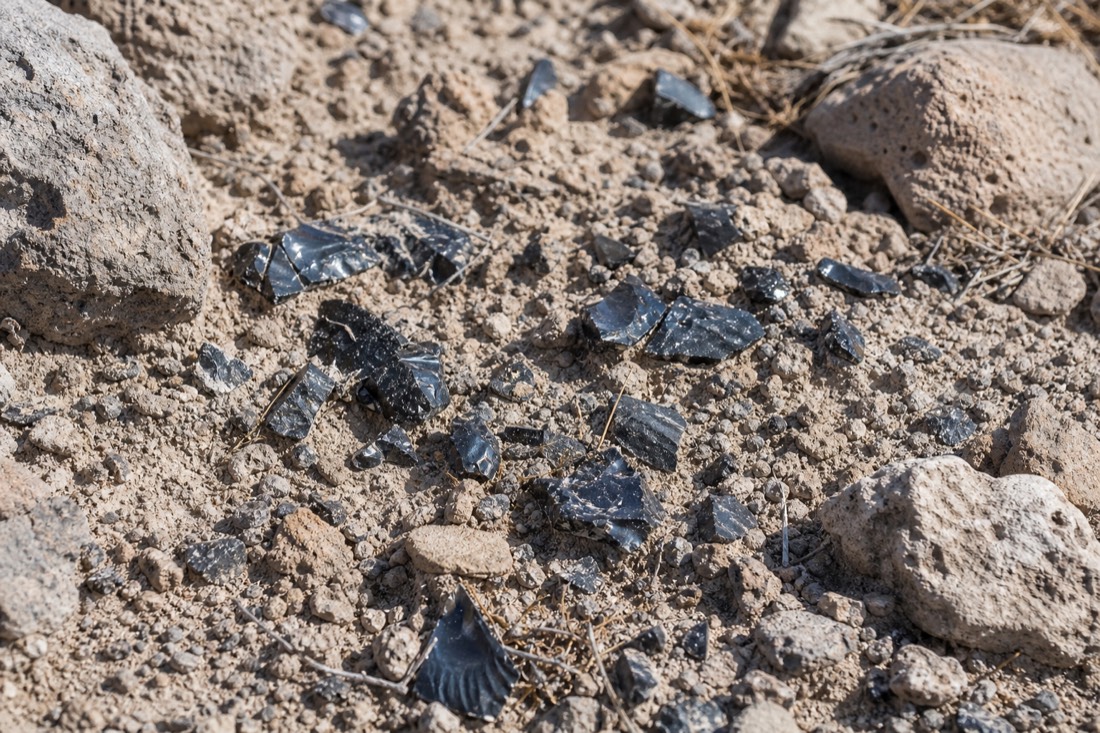
The valley sits beside major obsidian deposits, and in a world without metal tools, volcanic glass that flakes to a molecular edge is the best cutting material on earth. Teotihuacan controlled that trade across Mesoamerica.
This is not a footnote. The pyramids, the avenue, the apartment compounds and the reach that let Teotihuacan install a ruler at Tikal in the fourth century were all paid for by obsidian. It is also why every tour that stops at an obsidian workshop is, whatever else it is doing, pointing at the actual economic engine of the place.
It burned, and nobody knows why
Around the middle of the sixth century, the monumental structures along the Avenue of the Dead were burned. Not the whole city, and not randomly: the burning was concentrated on elite and ceremonial buildings.
That looks less like a foreign army sacking a capital and more like something internal. Revolt, factional collapse, a rejection of whoever or whatever the ceremonial core represented. The city did not vanish overnight, but it never recovered, and by 750 CE it was effectively finished. The full picture, and the drought and trade arguments, are in what happened to Teotihuacan.
Standing on the Avenue of the Dead, the thing worth holding in your head is that the buildings around you were deliberately set on fire by people who lived there.
What that means for a visit
| The special thing | Where you actually experience it |
|---|---|
| The plan and the alignment | From the air, at sunrise. Not from the ground. |
| The anonymity | In the absence of anything: no ruler's tomb, no name on a wall |
| The multi-ethnic city | The excavated compounds, and the site museum |
| Obsidian | The ground, the museum, and the workshops around the site |
| The burning | The Avenue of the Dead itself, once somebody has told you |
Almost none of that is signposted. Teotihuacan gives up very little to a visitor walking it cold, which is the strongest argument for taking a guide and for giving the site more than the ninety minutes a bundled tour allows.
And since you can no longer climb the pyramids, the aerial view is the only remaining way to see the thing that makes this place remarkable rather than merely large.
Five numbers that explain the city
| 1987 | The year UNESCO inscribed Teotihuacan as a World Heritage Site |
|---|---|
| 65 metres | The height of the Pyramid of the Sun |
| ~2 kilometres | The length of the Avenue of the Dead, the axis the whole city is built around |
| 100-550 CE | The city's peak, when it was one of the largest in the world |
| c. 550-750 CE | The collapse period, ending its 450 years as a regional power |
Plan your morning above Teotihuacan
Check the outing that fits your day
Initial editorial choice, not a personalized eligibility check. Confirm the operator’s full requirements before booking.
Where do you want to meet the special part: from the air, or with a guide on the ground?
This screens only the details you enter. Health, pregnancy, the 220 to 308 lb balloon surcharge band, language, pickup zones and all remaining restrictions still need operator confirmation. Time allowances include check-in and travel where the listing states them.
- Balloon flight with CDMX pickup, cave breakfast and pyramids visit. The full sunrise sequence in one booking: flight, cave breakfast and the ruins walked with a guide. About 4 to 7 hours door to door; pickup between 4:20 and 5:10 a.m. Shared basket; you climb into the basket. Site entry fee is extra. Over 100 kg (220 lb) up to 120 kg costs MXN 500 more; over 120 kg up to 140 kg costs MXN 1,000 more, per the listing. Weather moves or cancels flights.
- Private Teotihuacan tour with an archaeologist and VR experience. Answers the history questions a general guide skims: what the city was, who built it, and what the murals meant, from a working archaeologist. About half a day; confirm timing on the listing. You arrange your own transport to the meeting point; no hotel pickup. Children from about 6 per the listing age bands.
- Private Teotihuacan tour from Mexico City with entry tickets. A private guide and door-to-door transport for the pyramids themselves, on a day you keep for the ground. Roughly 5 to 6 hours door to door; confirm on the listing. Adult price bands start at 18 per the listing; child pricing applies up to about 7 years. A ground tour, not a flight.
Compare your actual party totals
Enter current quotes in the same currency. “Separate spending” means costs you would actually avoid, not a day you still pay for.
Balloon flight with CDMX pickup, cave breakfast and pyramids visit
Have a travel date in mind? Check it before arranging the rest of the day. The full sunrise sequence in one booking: flight, cave breakfast and the ruins walked with a guide.
About 4 to 7 hours door to door; pickup between 4:20 and 5:10 a.m. Balloon flight, toast and flight certificate, optional underground-cave breakfast, about 1.5 hours in the archaeological zone, transport from Mexico City when selected.
Shared basket; you climb into the basket. Site entry fee is extra. Over 100 kg (220 lb) up to 120 kg costs MXN 500 more; over 120 kg up to 140 kg costs MXN 1,000 more, per the listing. Weather moves or cancels flights.
Schedule loading. You can still check dates directly on Viator below.
Scheduled dates are not confirmed seats. Select the same date on Viator to confirm availability and the final price.